 4 minute read
Common Misconceptions About P2P Texting
What most teams get wrong about texting and what actually drives delivery, engagement and performance.
Texting is no longer experimental in political and advocacy outreach. It is foundational. Yet despite widespread adoption, many campaigns and organizations still misunderstand how texting actually works. These misconceptions reduce delivery rates, increase filtering risk and limit performance.
If your texting program is underperforming, it is rarely because “texting does not work.” More often, it is a misunderstanding of how modern texting operates and what truly drives results.
Below are the most common misconceptions we have encountered while working with 3500+ clients and teams over the years.

Misconception #1: “Texting Is Just Pressing Send”
At scale, texting is not a single action. It is a process.
Every message moves through a registered messaging infrastructure before reaching the handset (a.k.a. cell phones). Phone carriers evaluate trust signals tied to your brand, registration and message behavior. These factors determine how consistently messages reach their intended audience.
We break down the full path, key players and what impacts delivery in detail in our previous article on how the texting ecosystem works.
But effective texting does not stop at sending. The real value comes from interaction. Programs that monitor replies, respond in real time and foster two-way conversations build stronger engagement, clearer feedback and more stable messaging performance over time.
The key takeaway is simple. Delivery rates are not random. They reflect consistency, trust and ongoing engagement.
Misconception #2: “All Texting Platforms Work the Same”
Many teams choose platforms based on convenience. If you have a CRM or other coordinated outreach system (think an email software or automation tool) that also includes texting as an add-on, adding it to your existing plan can feel efficient.
But texting is not simply another add-on inside a broader marketing stack.
When texting is treated as a secondary feature, performance, visibility and functionality often suffer. Teams using platforms where texting is not the core focus may encounter:
- Basic reporting without behavioral context
- Slower identification of messaging issues before and during sending due to limited customer support and specialty texting ecosystem knowledge
- Limited tools built for conversation-driven outreach (we have been told by clients who have switched to us that some add-on texting tools lack the ability to respond to incoming replies whatsoever)
- Inconsistent clarity around delivery performance
At scale, success is not determined by the ability to simply send messages. It is determined by how well a platform is built to support texting as a distinct, complex communication channel.
Misconception #3: “More Volume Means More Impact”
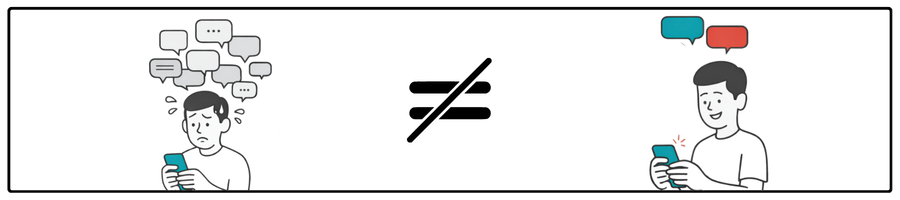
Sending more messages does not automatically increase results. If the underlying data is outdated, duplicated or poorly segmented, higher volume can amplify inefficiencies, leading to lower engagement and higher opt-outs.
Messaging invalid numbers wastes budget. Poor targeting reduces relevance and lowers response rates. Static lists fail to reflect changing voter or supporter status. Strong programs prioritize ongoing list hygiene by:
✅ Removing invalid, unreachable or landline numbers
✅ Updating contact attributes as voter or CRM data changes
✅ Segmenting based on relevance, status and timing
✅ Suppressing contacts who have opted out or are no longer eligible
✅ Maintaining clean, verified opt-in records
✅ Avoiding redundant or unnecessary outreach
A strong texting platform will handle most of these list hygiene best practices for you automatically, or provide the tools and capabilities to execute them. Capabilities like AB/EV Data Sync help keep outreach aligned with real-time voter file updates, reducing unnecessary follow-ups to voters who have already returned ballots and maintaining accurate targeting during critical GOTV windows.
Operational discipline matters. Impact is not created by volume alone. It comes from sending the right message to the right contact at the right moment.
Misconception #4: “P2P Texting Cannot Scale”
Some teams assume peer-to-peer texting is limited to small outreach because messages require human initiation. In practice, modern P2P texting programs are built to support large-scale outreach while preserving real human interaction.In a P2P texting project, texts are initiated by humans rather than sent as automated bulk messages. This keeps a real person behind each conversation and allows teams to respond to replies in real time, fostering more natural, responsive communication.
Automation alone does not create scale. Coordinated systems do. With capabilities such as Smart CRM segmentation tools, Dynamic Filtering & Tagging, team collaboration and centralized visibility through the Full-View Dashboard, texting programs can manage high-volume outreach with clarity and consistency. Teams stay aligned, conversations remain organized, and performance remains visible even as outreach expands.

The misconception often comes from equating human involvement with inefficiency. In reality, coordinated workflows and clear targeting allow P2P texting initiatives to operate at high volume while maintaining conversational integrity.
Misconception #5: “Texting Engagement Does Not Justify Campaign Spend”
Some teams do not question the value of texting, but they question whether the engagement it produces is strong enough to justify the budget allocated compared to other outreach channels.
The answer depends on whether performance can be measured and improved.
When outreach lacks targeting clarity or defined goals, results may appear uneven. But when programs are aligned around clear audience segments and specific objectives, texting produces trackable interaction and direct feedback that broadcast channels or paid advertising cannot provide.
Texting is observable. Teams can see who replied, who clicked, how conversations progressed and how engagement shifts over time. That feedback loop allows continuous refinement of messaging and audience strategy.
Investment is justified when outcomes are visible. In texting, engagement is not estimated. It is measurable.

Misconception #6: “Texting Replaces Direct Mail (or Email, or Events, etc.)”
Many members of our team have heard that some political professionals view texting as a replacement for traditional outreach, such as direct mail and email, and are unwilling to give up the tried-and-true just to implement texting.
This mental framing is too simplistic and fundamentally flawed. In practice, texting is most effective when used alongside other channels, not in place of them.
Using direct mail as an example - direct mail creates visibility, while texting creates immediacy and interaction. When combined, they reinforce each other, improving timing, response and overall program coordination, as this award-winning direct mail + texting use case from one of our clients outlines..png?width=823&height=432&name=Common%20Misconceptions%20About%20P2P%20Texting%20(2).png)
Modern campaigns do not rely on a single channel. They build layered communication strategies in which texting plays a critical role in reinforcing messages, activating audiences and creating direct engagement at key moments.
Texting is not an alternative to any outreach channel. It is a necessary complement to a complete and effective outreach strategy.
Conclusion: Performance Is Built Through Structure and Strategy
Across these misconceptions, one theme is clear. Texting performance can absolutely be negatively influenced by false perceptions, but programs that are designed, coordinated and integrated into a broader outreach strategy come out on top.
Texting is not just about sending messages. It depends on clean data, clear targeting, disciplined execution and real engagement. It also does not replace other channels. It strengthens them.
 6 minute read
%2c%20an%20Independent%20Study%20on%20Whether%20Political%20Texting%20Works%2c%20and%20MMS%20Images%20on%20iOS%2027.png)